
Developing Your Character and Growing Personally
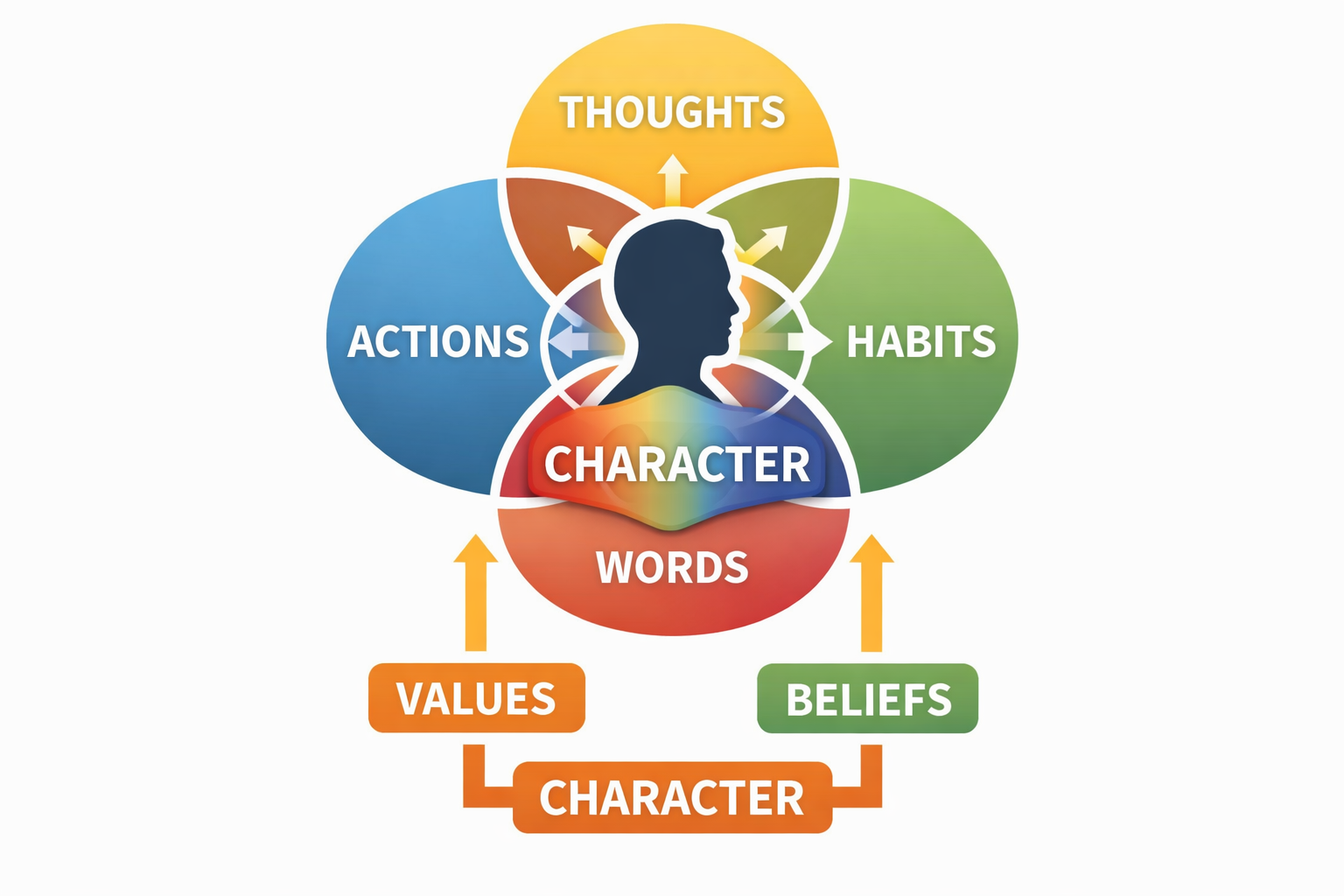
Character refers to the moral and mental qualities that define who a person truly is—how they think, choose, act, and respond to life, especially when no one is watching. It includes traits such as integrity, honesty, self-control, courage, compassion, and responsibility.
The Bible emphasizes the importance of character in Proverbs 20:11:
“Even children are known by the way they act, whether their conduct is pure, and whether it is right.”
As Abraham Lincoln wisely observed:
“Character is like a tree and reputation like its shadow. The shadow is what we think of it; the tree is the real thing.”
This reminds us that true character is not about outward appearance or public opinion, but about the inner values and integrity that guide our actions.
This verse highlights that character is revealed through behavior, not just words or intentions.
Developing your character is a lifelong journey that shapes who you are and how you interact with the world around you. It’s not simply about adopting good manners or following societal rules, but about cultivating a deep sense of integrity, resilience, and authenticity. In today’s fast-paced environment, personal character stands out as a crucial foundation for building meaningful relationships, advancing your goals, and living a fulfilling life.
Understanding the True Essence of Personal Character
Personal character isn’t a trait you’re born with—it’s shaped over time by your choices, environment, and experiences. Character encompasses qualities like honesty, empathy, responsibility, and courage. These traits influence how you respond to challenges and opportunities, forming the backbone of your reputation and self-perception. To truly develop your character, it’s essential to first grasp what it entails. Reflect on the traits you admire in others and consider why those particular qualities stand out to you.
Society, family upbringing, and cultural context each play a vital role in the early development of an individual’s character. However, the real evolution of character happens when you start making conscious choices about who you want to become. Take note of your daily behaviors and ask yourself whether they align with the person you aspire to be.
Self-awareness is the cornerstone of character development. It requires honest self-reflection and a willingness to acknowledge both strengths and weaknesses. By recognizing areas that need improvement, you lay the groundwork for meaningful change. Regular introspection helps you track progress and stay committed to personal growth.
Character is also closely linked to emotional intelligence.
It means becoming aware of your emotions and the feelings of others, and using that understanding to strengthen your relationships both personally and professionally. Individuals of strong character are often perceived as trustworthy, consistent, and empathetic, fostering deeper and more meaningful personal and professional relationships.
Remember, developing character is not about perfection. It’s about striving to be a little better every day. This humble, growth-oriented mindset allows you to face setbacks with resilience and optimism, rather than discouragement.
Lastly, the foundations of personal character aren’t static; they evolve as you grow and encounter new experiences. Stay open to learning and self-discovery, and remain patient as you progress on your journey toward a stronger, more resilient character.
Clarifying Your Core Values and Deeply Held Beliefs
Your core values and beliefs act as an internal compass, guiding your decisions and actions even when no one is watching. To develop your character, it’s crucial to identify these foundational principles. Begin by reflecting on moments in your life when you felt proud, fulfilled, or particularly challenged. What values were at play during these times?
Take some time to write down a list of traits or principles that matter most to you—such as honesty, compassion, fairness, or perseverance. Rank them in order of importance and consider why each one resonates with you. This exercise helps clarify what you stand for and where you draw the line when faced with tough decisions.
Sometimes, you may realize that certain beliefs have been adopted unconsciously from family, culture, or society. It’s vital to examine whether these inherited values truly align with your authentic self. If not, be open to redefining your beliefs to better reflect your true nature. This process can be challenging, but it is essential for genuine character development.
Discussing your values with trusted friends or mentors can provide new perspectives and deepen your understanding. Others might notice strengths or blind spots that you haven’t considered. These conversations can reinforce your values and encourage you to live by them more consistently.
Once you’ve identified your core values, make a conscious effort to integrate them into your daily life. Let them guide your choices, big and small, and use them as a reference point when you’re faced with dilemmas or uncertainty.
Ultimately, knowing and honoring your core values fosters authenticity. When your actions align with your beliefs, you strengthen your character and earn the respect of those around you. This sense of inner harmony nurtures both personal satisfaction and lasting self-confidence.
Setting Achievable Goals for Character Development
Goal-setting is a powerful tool for personal growth, but it’s important that your objectives are realistic and aligned with your values. Start by identifying specific areas of your character you want to develop—perhaps patience, discipline, or empathy. Define what success looks like for you in each area.
Break down your goals into manageable steps. For instance, if you’re working on becoming more disciplined, set small daily tasks such as sticking to a schedule or limiting distractions. Achievable milestones build confidence and keep you motivated, while overly ambitious goals can lead to frustration and burnout.
When you write down your goals, they become clearer, and your dedication to them grows stronger. The Bible affirms this principle in Habakkuk 2:2–3, which says: “Write the vision and make it plain… though it tarries, wait for it; because it will surely come.” Consider keeping a journal or using a goal-tracking app to monitor your progress. Regularly review your objectives and adjust them as needed based on your experiences and changing circumstances.
It’s also helpful to share your goals with someone you trust. Accountability partners can provide encouragement, offer constructive feedback, and help you stay on track. Be open to their insights and use setbacks as learning opportunities rather than reasons to give up.
Remember, the journey of self-improvement isn’t linear. There will be ups and downs, but the key is perseverance. Celebrate your achievements, no matter how small, and use them as motivation to keep moving forward.
By setting realistic goals and pursuing them, you reinforce commitment to your character development. Over time, the incremental changes you make will add up to a significant transformation, bringing you closer to the person you aspire to be.
Turning Setbacks Into Opportunities for Growth
No path to character development is free of obstacles. In fact, it’s often through adversity that you discover your true strength and resilience. Embracing challenges rather than avoiding them is a hallmark of strong character. These moments test your values and force you to stretch beyond your comfort zone.
When you encounter setbacks or failures, resist the urge to view them as personal shortcomings. Instead, reframe them as valuable learning experiences. Every mistake is an opportunity to reflect, adapt, and grow. Ask yourself what went wrong, what you could have done differently, and how you can apply these lessons in the future.
Adopting a growth mindset is essential. This means believing that your abilities and character can be developed with effort and perseverance. Rather than seeking perfection, focus on progress and resilience. By normalizing setbacks, you reduce the fear of failure and become more willing to take positive risks.
Humility plays a key role in learning from mistakes. Accepting responsibility for your actions, apologizing when necessary, and making amends demonstrate maturity and integrity. Others will respect you more for your honesty and willingness to improve.
Support from friends, family, or mentors can be invaluable during challenging times. Don’t hesitate to seek guidance and share your experiences. Often, others have faced similar challenges and can offer wisdom or encouragement to help you persevere.
Ultimately, embracing challenges and learning from mistakes forge a resilient character that can withstand the tests of time.
Through these experiences, you gain deeper self-awareness, stronger resolve, and the moral courage to face life’s challenges with confidence.
Establishing Consistent Habits for Lasting Change
Lasting character is built not through occasional grand gestures, but by the everyday habits you practice. Consistency is crucial—small, positive actions performed regularly have a powerful cumulative effect.
Begin by choosing habits that reinforce your character goals—like keeping a gratitude journal, listening attentively to others, or volunteering your time.
Establish a daily routine that incorporates these habits. Start with one or two manageable changes, such as setting aside five minutes each morning to reflect on your values or extending kindness to a colleague. Over time, these actions will become second nature, shaping your identity and reinforcing your character.
Habit-building requires patience and persistence. Expect some days to be more challenging than others, but don’t let occasional lapses derail your progress. Instead, treat each day as a fresh opportunity to practice and improve.
Tracking your habits can provide a sense of accomplishment and help you identify patterns. Use a journal, checklist, or digital app to record your efforts and reflect on your progress. Celebrate your consistency, no matter how incremental it may seem.
It’s also important to periodically reassess your habits. As your character evolves, some routines may no longer serve you, while new ones may be needed. Stay flexible and open to adjusting your practices to better align with your growth.
Consistency in positive habits fosters self-discipline, resilience, and authenticity. Over time, these daily actions not only strengthen your character but also positively influence those around you, creating a ripple effect of growth and integrity in your community.
Developing your character is a deeply personal and ongoing process, marked by self-awareness, intentional growth, and a commitment to living authentically. By understanding the foundations of character, clarifying your core values, setting realistic goals, embracing challenges, and building daily positive habits, you lay the groundwork for lasting self-improvement. Remember, true character shines brightest not in easy moments, but in times of adversity and decision. Stay patient, trust the process, and celebrate your progress no matter how small. Over time, your efforts will not only transform you but also inspire and uplift those around you, making character development one of the most rewarding journeys you’ll ever undertake.
Research in positive psychology suggests that character strengths — the mental capacities for thinking, feeling, and behaving in brave, fair, and hopeful ways — are central to both mental well-being and personal growth (see The New Mental Health: Science Says It’s Character Strengths).
Explore Tools for Growth
Virtue Wheel
Understand your virtues and uncover areas for growth. Track your personal growth.
Explore Virtue WheelBible Challenge
Deepen your faith and apply biblical principles to your life with engaging daily challenges.
Take the Challenge