How to Recognize Your Own Character Flaws
Recognizing your own character flaws is one of the most challenging—and empowering—things you can do for personal growth. It’s easy to spot where others fall short, but far harder to see our own imperfections. Yet, true transformation begins when you turn your focus inward, acknowledging that you, too, are a work in progress. Before you demand change in others, consider how you might change yourself. Let’s explore what character flaws really are, why we often overlook our own, and how embracing self-awareness can set you on a path to becoming your best self.
Understanding What Character Flaws Really Are
Character flaws are not simply bad habits or annoying quirks; they are deeper patterns of thought, feeling, or behavior that hinder your growth and relationships. These flaws might include stubbornness, impatience, jealousy, or a tendency to avoid responsibility. Everyone has them, no matter how polished they may seem on the outside. Flaws are a natural part of being human—they show up in subtle ways, sometimes masquerading as strengths taken too far.
It’s important to remember that having flaws doesn’t mean you’re a bad person. Rather, it means you have areas that need attention and care. Often, what we label as a “flaw” is a trait that, when balanced, can be a strength. For example, assertiveness can tip into aggression, or carefulness can become indecisiveness. Recognizing the spectrum of these traits helps you understand yourself with greater compassion and empathy.
Many people shy away from admitting their flaws because they equate them with weakness. However, the reality is the opposite: the courage to name your imperfections is a mark of true strength. It is only through this awareness that you can begin to transform yourself. Instead of hiding behind excuses, you open yourself to the possibility of growth.
Character flaws are also influenced by your upbringing, experiences, and environment. What you learned from family, friends, and society can contribute to both helpful and unhelpful patterns. Understanding this can help you approach your flaws not with shame, but with curiosity and a desire to improve.
Ultimately, flaws are not fixed or unchangeable. They are simply starting points for self-discovery and development. They are opportunities to become more self-aware and empathetic—towards both yourself and others.
By understanding what character flaws really are, you set the stage for honest self-reflection and meaningful change.
Why We See Others’ Flaws Before Our Own
It’s a curious part of human nature: we are quick to notice the shortcomings in people around us, yet often blind to our own. This tendency isn’t just about ego; it’s rooted in how our brains work. We are wired to evaluate and judge what’s outside of us, because it’s easier to observe other people’s behavior than to examine our own inner motives.
Psychologists refer to this as the “self-serving bias.” We naturally want to protect our self-image, so when something goes wrong, our instinct is to look outward instead of inward. This bias makes it more comfortable to blame others for problems or conflicts, rather than considering how our own actions might have contributed.
Social comparisons also play a role. When we focus on others’ flaws, it can make us feel better about ourselves, at least temporarily. We might think, “At least I’m not as impatient as she,” or “He’s always so stubborn, unlike me.” While these comparisons can prop up our self-esteem in the short term, they prevent us from addressing our own areas for growth.
There’s also the simple fact that self-reflection requires effort and vulnerability. Examining your own actions can uncover truths that are hard to face. It’s much easier, emotionally, to critique someone else’s actions than to admit when you’ve been wrong, insensitive, or thoughtless.
Another reason we spot others’ flaws easily is projection. Sometimes, the qualities that irritate us most in others are the very ones we struggle with ourselves. By focusing on someone else’s impatience or arrogance, for example, we avoid facing our own similar traits.
Recognizing this pattern is the first step to reversing it. When you find yourself judging someone, pause and ask: “Is this something I also struggle with?” This simple question can open the door to greater empathy and self-awareness.
The Power of Honest Self-Reflection and Awareness
Honest self-reflection is a transformative practice. It begins with a willingness to look inward—not to judge or criticize yourself harshly, but to understand and accept yourself fully. This kind of awareness is the foundation for personal growth, healthy relationships, and true confidence.
Developing self-awareness requires humility. It’s about accepting that, like everyone else, you have blind spots and weaknesses. Embracing this truth can be liberating. It frees you from the exhausting pursuit of perfection and opens you to real connection with others.
Journaling can be a powerful tool for self-reflection. By writing about your thoughts, emotions, and actions each day, you begin to notice patterns. Over time, you can spot recurring themes—times when you acted defensively, avoided responsibility, or made decisions out of fear. These insights are not always comfortable, but they are invaluable.
Feedback from others is another essential ingredient in self-awareness. Sometimes, friends, family, or colleagues see things about us that we simply can’t. Seeking feedback—and listening without becoming defensive—can reveal aspects of your character you might otherwise miss.
Studying the Bible—especially books like Proverbs, James, and the teachings of Jesus—helps you examine your heart and build godly character. Scripture acts as a mirror, revealing attitudes such as pride, anger, impatience, or selfishness that we may overlook in ourselves. When you notice yourself reacting defensively or harshly, pause and reflect on God’s Word and ask, “What does this reveal about my heart?” Ultimately, honest reflection is not about self-criticism—it’s about self-compassion.
Practical Steps to Identify Your Personal Weaknesses
Recognizing your own character flaws is not always straightforward, but there are practical steps you can take to make it easier. The journey starts with a conscious decision to look inward and a commitment to personal growth.
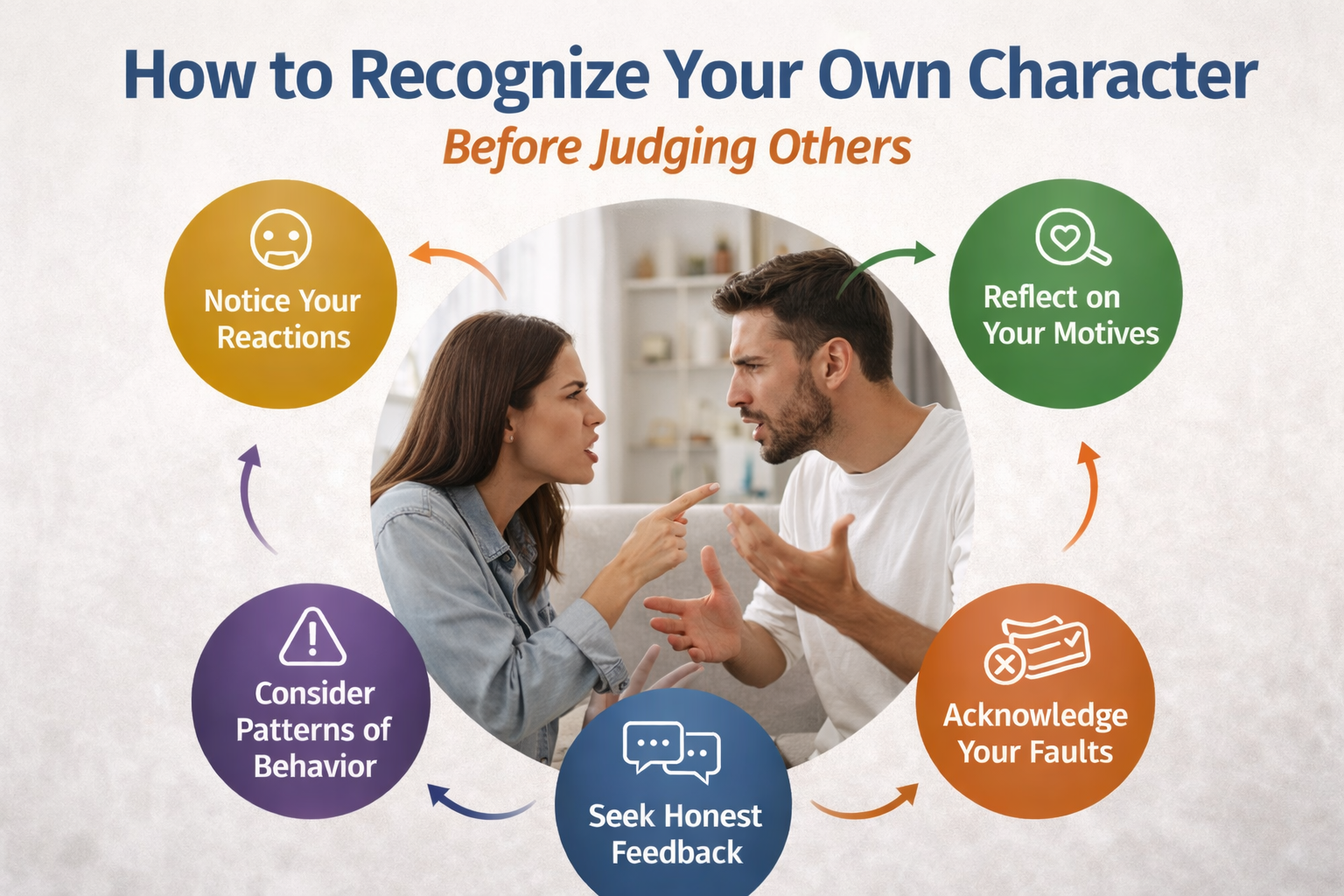
- Ask for Honest Feedback: Sometimes, those close to us can see what we can’t. Ask trusted friends, family members, or colleagues to gently point out areas where you might need improvement. Be specific—ask about certain situations or traits. Remain open and thank them for their honesty.
- Notice Your Emotional Reactions: Pay attention to situations that trigger strong emotions, such as anger, jealousy, or defensiveness. These reactions often point to deeper issues or unhelpful patterns. Reflect on what’s really bothering you and what part you played in the situation.
- Keep a Behavior Journal: Spend a few minutes each day jotting down moments when you feel proud or disappointed in your actions. Over time, patterns will emerge. Notice when you tend to avoid responsibility, act impatiently, or judge others harshly.
- Embrace Constructive Criticism: Instead of becoming defensive when someone points out a flaw, pause and consider if there’s truth in what they’re saying. Even if the feedback isn’t delivered perfectly, there may be insight hidden within.
- Practice Mindful Observation: During your daily life, catch yourself in the act—whether it’s interrupting someone, avoiding a hard conversation, or making snap judgments. Name the behavior without shame and commit to responding differently next time.
- Set Small, Measurable Goals: Once you’ve identified a flaw—say, impatience—set a concrete goal, such as taking three deep breaths before responding in frustrating situations. Track your progress and celebrate small victories. Remember, everyone has blind spots. The process of identifying your flaws is ongoing and requires patience, humility, and a sense of humor.
Embracing Growth: Turning Flaws into Strengths
Admitting your flaws is only the first step; the real transformation comes when you actively work to grow from them. Every character flaw contains the seed of a potential strength. For example, stubbornness, when channeled wisely, can become determined persistence. Sensitivity, when balanced, can be a great asset for empathy and understanding.
Growth begins with acceptance. Rather than fighting against your flaws or pretending they don’t exist, embrace them as part of your unique human experience. This doesn’t mean excusing harmful behavior, but rather choosing to see every flaw as an opportunity for learning and improvement.
One powerful way to foster growth is by replacing negative self-talk with encouraging language. Instead of saying, “I’m so impatient—I’ll never change,” try, “I’ve noticed I get impatient, but I’m working on slowing down and being present.” Self-compassion fuels motivation much more effectively than self-criticism.
Surround yourself with people who support your growth and hold you accountable, share your intentions with trusted friends or mentors, and ask them to check in with you. Their encouragement and honest feedback can keep you on track, even when progress feels slow.
Celebrate your successes, no matter how small. Growth is not about becoming flawless, but about making consistent progress. Every time you catch yourself choosing patience over irritation or honesty over deflection, acknowledge your effort.
Recognizing your character flaws first is a bold act of self-love and courage. It’s far easier to demand change from others than to look in the mirror, but true transformation always begins with you. By understanding what character flaws are, becoming aware of your blind spots, practicing honest self-reflection, and taking concrete steps for growth, you unlock the door to a stronger, kinder, and more authentic version of yourself. Before you ask for change in someone else, remember: your willingness to grow is the greatest change you can make—and it inspires everyone around you to do the same.
Explore Tools for Growth
Virtue Wheel
Understand your virtues and uncover areas for growth. Track your personal growth.
Explore Virtue WheelBible Challenge
Deepen your faith and apply biblical principles to your life with engaging daily challenges.
Take the Challenge